Cleanup service
Burst Lines in Apartments, Offices and Shops
In a single-family home, a burst pipe has one owner and one set of decisions. In an apartment building, condo, office or shop, the same leak can involve an owner, a manager, two or three tenants, an HOA and more than one insurance policy. The water damage work is the same; the coordination around it is not.
Routing to a contractor near you can take a moment or two. Keep the line open until a person picks up.
Who Usually Makes the Call
Property owners and landlords. Usually want the water stopped, the affected units dried, and records they can hand to an insurer and to tenants. Ask for the drying log and photos from the start.
Property managers. Often juggling access to several units at once. Have a list of affected units, contact details for occupants, and the location of the building's main and individual unit shutoffs ready before the call.
Tenants. If water is actively spreading and you know where the shutoff is, close it, then tell your landlord or manager right away. Your lease may say who arranges repairs and cleanup. If you can't reach anyone and the water keeps coming, calling for cleanup help is reasonable, but let the owner know as soon as you can.
HOA boards and community managers. Common-area pipes, shared walls and units above or below other units make HOA leaks layered. The CC&Rs and the association's master policy usually set out who is responsible for which parts of the building.
Business owners. Offices and shops want to keep trading where possible. Mention opening hours on the call so the contractor can plan around them.
When Water Crosses Into the Next Unit
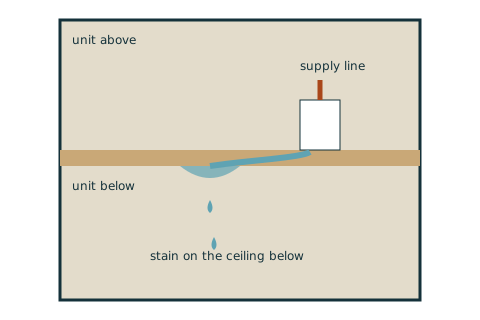
Water doesn't respect unit lines. A supply line in an upstairs bathroom can soak the ceiling of the unit below, and a leak in a shared wall can reach both neighbours. Each affected unit needs its own readings and photos, even if the damage looks minor, because the paperwork often ends up split between different owners or policies. This site doesn't decide who pays; leases, CC&Rs and insurance policies do. Burst pipes and homeowners insurance in Utah covers the general questions owners usually ask.
Lines That Freeze in Commercial Buildings
Commercial and multi-unit buildings have spots that homes don't: fire sprinkler branch lines in unheated attics, stairwells and loading areas, pipes in vacant units with the heat turned down, and supply lines in exterior soffits. A frozen sprinkler line can release a lot of water quickly. The building's fire protection contractor handles the sprinkler system itself; the cleanup contractor handles the water it left behind.
Keeping Units and Businesses Running During Drying
Drying equipment can often be contained to the affected rooms with plastic sheeting, so the rest of a building stays in use. In occupied units, the noise and the closed-off areas need to be explained to tenants. Ask whether disruptive work, such as cutting drywall, can be scheduled around business hours or tenant access. Air scrubbers help keep dust from tear-out out of shared hallways.
Paperwork Owners and Managers Usually Ask For
- Photos of each affected unit and common area before work starts
- Moisture maps with dated readings, unit by unit
- An equipment list showing what ran where and for how long
- A written scope of what was removed and why
- A certificate of insurance; many managers ask to be named as the certificate holder
The extraction and drying page explains what the drying log contains. Water heater and appliance failures are common in rentals; see appliance and supply line leaks.
As with any contractor, check their Utah license with DOPL before work starts.
Much of Layton's apartment, retail and office space sits in West Layton, along the I-15 corridor and around the Layton Hills Mall area.
Questions From Owners, Managers and Tenants
As a tenant, should I call this number or my landlord?
Tell your landlord or manager first if you can reach them, because your lease may give them the job of arranging cleanup. If the water is spreading and nobody answers, shut off the water and call for help, then keep the owner informed.
Can the units next door stay occupied during drying?
Usually, unless their own rooms are wet or the work affects shared walls. The contractor checks neighbouring units with a meter and lets you know which rooms need to stay closed.
Is a burst sprinkler line a fire sprinkler job or a water damage job?
Both. The fire protection contractor repairs and restores the sprinkler system. The cleanup contractor removes the water and dries the building.
Burst Line in a Layton Rental or Business
Routing to a contractor near you can take a moment or two. Keep the line open until a person picks up.