Cleanup service
Musty Smell Weeks After the Leak Was Fixed
The pipe was fixed, the puddle was mopped up, and the house looked fine. Then, a few weeks later, a closet or a basement room starts to smell like a damp cellar. That smell almost always means something stayed wet.
Routing to a contractor near you can take a moment or two. Keep the line open until a person picks up.
Why Would Mold Show Up After the Leak Was Fixed?
Mold needs moisture, and a fixed pipe doesn't dry the materials it soaked. The U.S. EPA advises drying water-damaged areas and materials within 24 to 48 hours to help prevent mold growth. Leaks that get past that window are usually the ones nobody could see: water that ran inside a wall, sat under a carpet pad, or soaked a cabinet base. Drying done with household fans alone often dries the surface while the inside stays wet.
Where Does It Usually Turn Up?
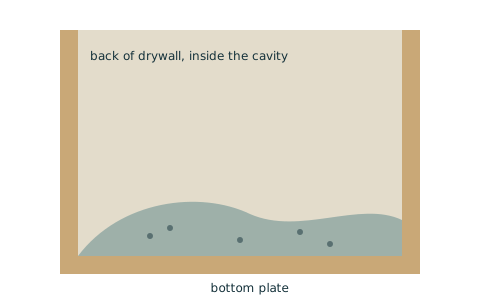
After a supply line leak, the common spots are the back of the drywall near the floor, the paper face of drywall inside a wall cavity, the underside of carpet pad, behind baseboards, the floor of a sink base cabinet, and subfloor under vinyl or laminate. In ceilings, wet insulation lying on drywall is a frequent source. Many of these spots look normal from the room side.
What Does a Mold Check Involve?
It starts with moisture, not mold. The contractor takes readings in the area of the old leak and around the smell, because anything still wet is both the cause and the first thing to fix. Thermal imaging can help find damp areas behind surfaces. Where something looks suspect, a small inspection opening may be cut. Sampling or air testing is sometimes used, and some homeowners prefer to have testing done by a separate assessor from the company that removes the mold. Ask how the contractor handles that.
If readings show the area is still wet, drying comes first; see extraction and drying.
When Does It Become Remediation?
When growth is found on materials, the work changes. Typically the area is closed off with plastic sheeting and kept under negative air pressure so spores don't spread to the rest of the house. Porous materials with growth, such as drywall, insulation and carpet pad, are cut out and bagged. Framing and other solid surfaces are cleaned and HEPA-vacuumed, and the source of moisture is confirmed fixed. EPA guidance notes that a small area, under about 10 square feet, may be something a homeowner can handle, while larger areas or growth from contaminated water call for someone experienced.
What Shouldn't You Do in the Meantime?
Don't scrub or dry-brush visible growth, which puts spores in the air. Don't spray bleach and paint over it; bleach doesn't fix the moisture and the paint hides the problem. If the area is near a furnace return or duct, ask about shutting off the system or blocking the return so air from that room isn't spread through the house.
Is It a Health Concern?
The EPA notes that mold can cause allergic reactions and can trigger asthma in people who are sensitive to it. Anyone with asthma, a weakened immune system or a respiratory condition should stay out of the affected area and talk to their doctor about any symptoms.
Which Leaks Most Often Lead Here?
Slow leaks are more likely than sudden ones, because they run longer before anyone notices: ice-maker lines, sink connections and toilet supplies, and ceiling leaks where insulation stayed wet. The article on whether burst-pipe water is clean explains why water that sits around gets harder to deal with.
Before agreeing to any removal, ask the contractor to show you the readings and the affected areas, check their Utah license through DOPL, and get proof of insurance.
Two Short Questions
Will an air purifier fix a musty smell?
It can reduce what's in the air, but it doesn't touch the wet material producing the smell. The moisture has to be found and dried.
Does a musty smell always mean mold?
Not always. Damp materials smell musty even before growth is visible. Either way, the smell means moisture, which is worth checking.
Musty Room After a Leak in Layton
Routing to a contractor near you can take a moment or two. Keep the line open until a person picks up.